Feel free to write
Our staff would be delighted to assist you and offer a solution that meets your need.

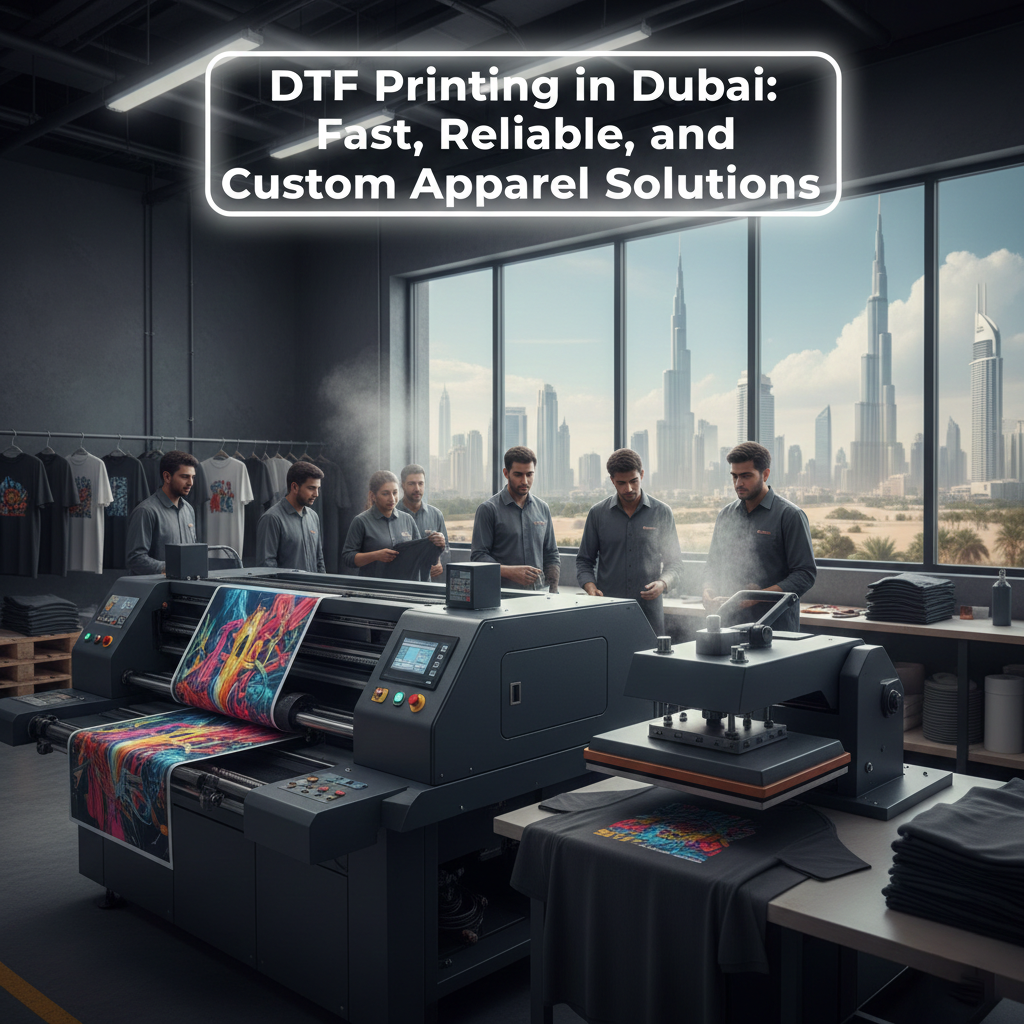
In today’s competitive business environment, *customized apparel and branded merchandise* play a crucial role in creating strong brand visibility and lasting impressions. Whether it’s corporate uniforms, promotional T-shirts, polo shirts, or customized gift items, companies are increasingly looking for efficient and high-quality printing solutions. One of the most effective and versatile methods available today is *Direct to Film (DTF) printing*.
What is DTF Printing?*
*Direct to Film (DTF) printing* is a modern printing technique where designs are printed directly onto a special film and then transferred onto fabric or other surfaces using heat and pressure. Unlike traditional printing methods, DTF allows for:
* High-resolution, vibrant prints
* Excellent color accuracy
* Strong durability and wash resistance
* Compatibility with various fabric types and colors
DTF printing works seamlessly on *cotton, polyester, blends, and even darker fabrics*, making it a preferred choice for apparel customization and corporate branding.
Growing Demand for DTF Printing in Dubai
Dubai is home to a diverse business ecosystem, including corporate offices, event organizers, retail brands, schools, gyms, and hospitality companies. These businesses frequently require *custom-made garments* such as:
* T-shirts and polo T-shirts
* Staff uniforms
* Event apparel
* Promotional clothing
* Branded corporate gift items
Custom garments help companies project professionalism, reinforce brand identity, and leave a positive, lasting impression on customers and employees alike.
As a result, *DTF printing services in Dubai* are in high demand, with both individuals and organizations relying on a wide network of small and large suppliers across the city.
The Challenge: Long Turnaround Times
Despite the availability of many suppliers, one of the most common challenges faced by customers is *long turnaround times*. In many cases, suppliers outsource printing or rely on external facilities, which leads to delays—especially during peak seasons or when urgent orders are required.
It has been repeatedly observed that companies often need *custom T-shirts, polo shirts, or uniforms within a few hours*, particularly for:
* Last-minute corporate events
* Trade shows and exhibitions
* Product launches
* Urgent staff onboarding
* Promotional campaigns
Unfortunately, most suppliers struggle to meet these tight deadlines.
PP Apparel Hub’s Solution: In-House DTF Printing Facility
Recognizing this gap in the market, *PP Apparel Hub* took a customer-centric approach and established a *fully in-house DTF printing facility* located in *Al Quoz 3 Industrial Area, Dubai*.
By bringing the entire DTF printing process in-house, PP Apparel Hub eliminates dependency on third-party printers. This provides a significant advantage in terms of *speed, control, and quality*.
Why PP Apparel Hub Has an Unfair Advantage
PP Apparel Hub’s in-house setup allows them to cater to urgent and bulk requirements efficiently. Their key advantages include:
* *Minimal turnaround time* – ideal for urgent and same-day orders
* *Consistent print quality* with strict quality control
* *Flexibility* to handle small and large quantities
* *Customization on demand* for garments, uniforms, and accessories
Whether a customer needs only the DTF print or complete printing on garments, PP Apparel Hub is equipped to deliver results in the *shortest possible time* without compromising on quality.
Applications of DTF Printing at PP Apparel Hub
The in-house DTF printing facility supports a wide range of applications, including:
* Corporate uniforms and workwear
* Promotional T-shirts and polo shirts
* Event and exhibition apparel
* Sportswear and team uniforms
* Customized apparel for startups and brands
* Printing on various fabric-based gift items
This versatility makes PP Apparel Hub a reliable partner for businesses across different industries.
### Meeting the Needs of a Fast-Paced Market
Dubai’s business environment moves fast—and so do its requirements. PP Apparel Hub’s ability to respond quickly to customer needs sets it apart from traditional suppliers. Companies no longer have to plan weeks in advance or compromise on deadlines when urgent customization is required.
By combining *advanced DTF printing technology, an **in-house production facility, and a **customer-focused approach*, PP Apparel Hub ensures timely delivery and superior results.
Conclusion
DTF printing has transformed the way custom apparel and branded merchandise are produced, offering flexibility, durability, and vibrant results. In a city like Dubai, where time and quality are equally critical, having access to a fast and reliable DTF printing partner is essential.
With its in-house DTF printing facility in *Al Quoz 3, **PP Apparel Hub* provides an unmatched advantage—delivering custom garments and prints in record time while maintaining exceptional quality. For businesses and individuals looking for efficient, professional, and urgent DTF printing solutions in Dubai, PP Apparel Hub stands out as a trusted choice.
For more information please contact www.ppapparelhub.com and/or +971502667215 / +971501092667
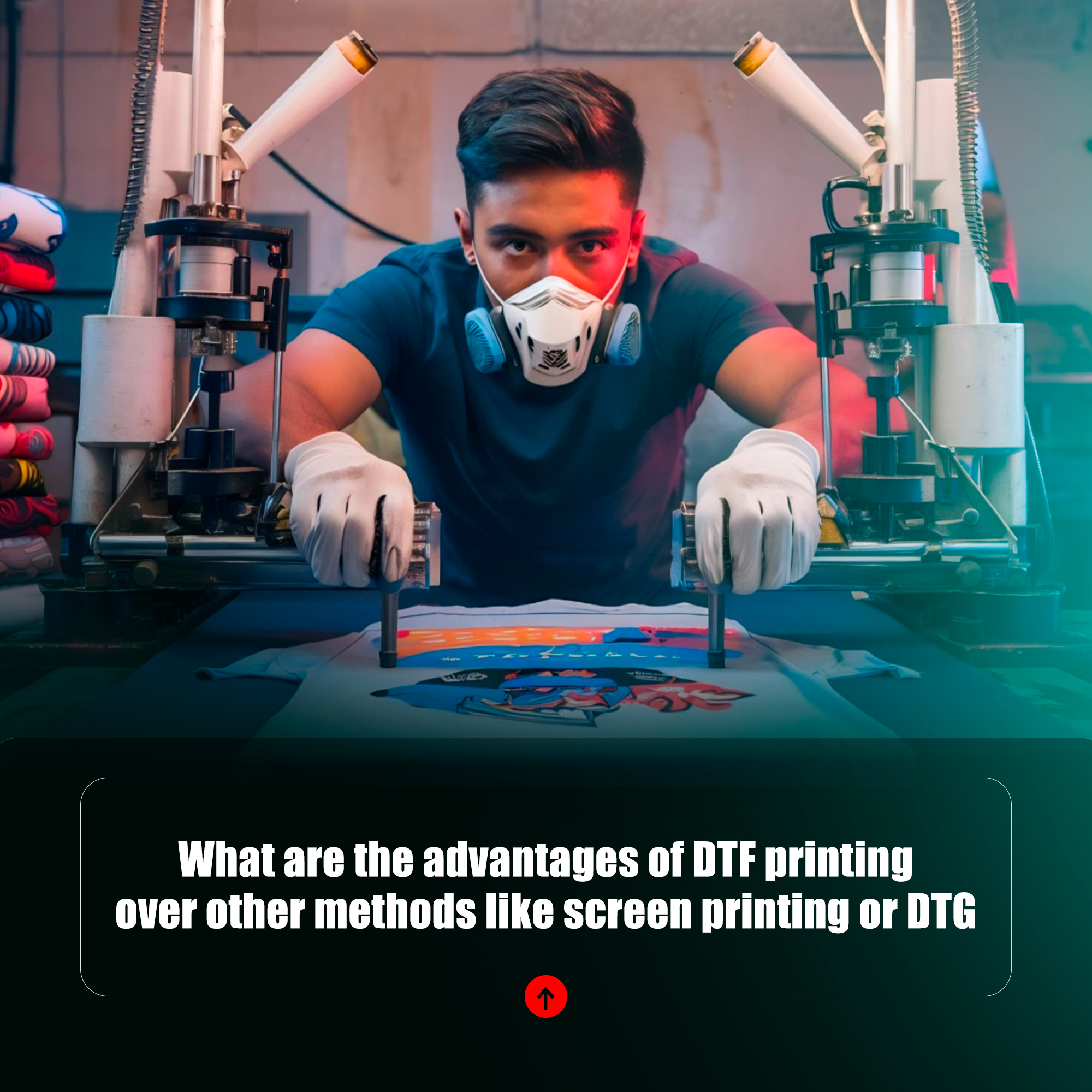
The world of promotional clothing and custom t-shirts has traditionally operated within major limits. Direct-to-garment (DTG) printing helped with small orders, but screen printing was still the main method for large runs. However, a significant change has been quietly developing that breaks down these old restrictions easily.
This change is Direct-to-Film (DTF) printing, which is not just another option but a real transformation that offers benefits for both established print shops and new startups. DTF printing services in UAE provide simplicity and flexibility that are significantly changing the industry; no more complicated setups or fabric limitations. Now we can go through ‘What are the advantages of DTF printing over other methods like screen printing or DTG?’ to get more information.
Suppose a customer comes in with a beautiful, full-color design intended for a sweatshirt made of a 50/50 cotton and polyester blend. Ten years ago, this might have been concerning. Screen printing these complex colors on mixed fabrics was hard to do cheaply, and DTG (direct-to-garment) printing didn’t work well on fabrics with less than high cotton content. However, DTF (direct-to-fabric) printing offers unmatched flexibility with fabric types, making it a clear leader.
Fabric composition doesn’t matter for DTF. DTF consistently adds brightness to many materials, including canvas, leather, denim, fleece, performance fabrics, 100% cotton, durable polyester, and even non-textiles like wood or glass (when the right powders are used). The process is key. Designs are printed with pigment inks (CMYK plus white) on customized PET film. A fine powdered thermoplastic glue is then applied to the printed film. The film is pressed onto the garment with a heat press; the melting powder creates a strong bond between the substrate and the ink, regardless of the fiber content. This removes the limitations of using only cotton, opening up new artistic and business opportunities that were once seen as too difficult or expensive.
Screen printing needs a separate screen for each color, and because the setup costs are high, small orders usually aren’t worth it financially. While Direct-to-Garment (DTG) printing eliminated the need for screens, it introduced new issues: expensive pretreatment for dark-colored clothes, sensitivity to different fabric types, and sometimes inconsistent results. Direct-to-Film (DTF) printing avoids all these problems entirely.
The economics of DTF printing are appealing, especially for small quantities. You don’t need to burn screens or pretreat clothing. You simply print your transfer film. This makes it easy and cost-effective to produce just one shirt or many, with high quality. Need shirts for an event? You can now connect with the best brand clothing manufacturers Dubai to meet all customized apparel requirements.
If a bright print fades or cracks after a few washes, it’s not good anymore. At first, some people doubted how long DTF prints last, but the technology has improved a lot. With high-quality inks and proper application, modern DTF prints can last through 30 to 50 washes. This is better than vinyl, meets industry standards for DTG, and is almost as durable as screen printing on simple designs.
The cured ink layer is stretchy and flexible, allowing the print to move with the fabric without breaking. This creates a durable finish when combined with strong adhesive. DTF printing is excellent at capturing fine details and photos, with accuracy similar to DTG, showing small lines and gradients clearly. It can print unlimited colors in one pass, unlike screen printing which gets complicated and costly with many colors. The result is detailed, eye-catching artwork that keeps its color after many washes.
Businesses and consumers alike are calling for more environmentally friendly operations. Here, DTF has a number of natural benefits. Leading DTF systems now employ water-based pigment inks instead of the PVC-based plastisol inks used in screen printing, which require harsh chemicals to clean. The environmental impact of solvent consumption and cleaning is greatly decreased by these inks.
DTF technology is rapidly evolving. Automation is a key area of development. Large machines like motorized powder shakers and conveyor belt heat presses are making DTF capable of mass production, handling hundreds of transfers per hour. In contrast, basic printers may only do a few. This creates a middle ground between the high-volume efficiency of screen printing and DTF’s flexibility for small runs.
New applications are always being added to the list. DTF transfers can stick to many surfaces, including caps, bags, mugs, signs, metal, and wood when using special powders. There are also new special effects, like glitter, puff (which makes a raised look), and color-changing inks that enhance creativity.
Mass customization is a very interesting trend. DTF from major clothing manufacturers in UAE makes it easy to print single images, names, or unique designs just as easily as printing large batches of similar shirts. This helps companies offer personalized products and meet the increasing demand for unique items.
Is DTF replacing DTG or screen printing? Not really. Screen printing is still the best choice for very high-volume orders with simple designs on light-colored clothing, because it’s cost-effective at scale.
However, DTF is still important because it combines flexibility, affordability for small orders, high quality, durability, and growing potential. It allows for more creative projects and helps fill gaps that other methods can’t. For designers, it means more creative freedom. Customers can expect better, longer-lasting personalized clothing on almost any item. This quiet revolution in printing is changing the custom clothing industry.
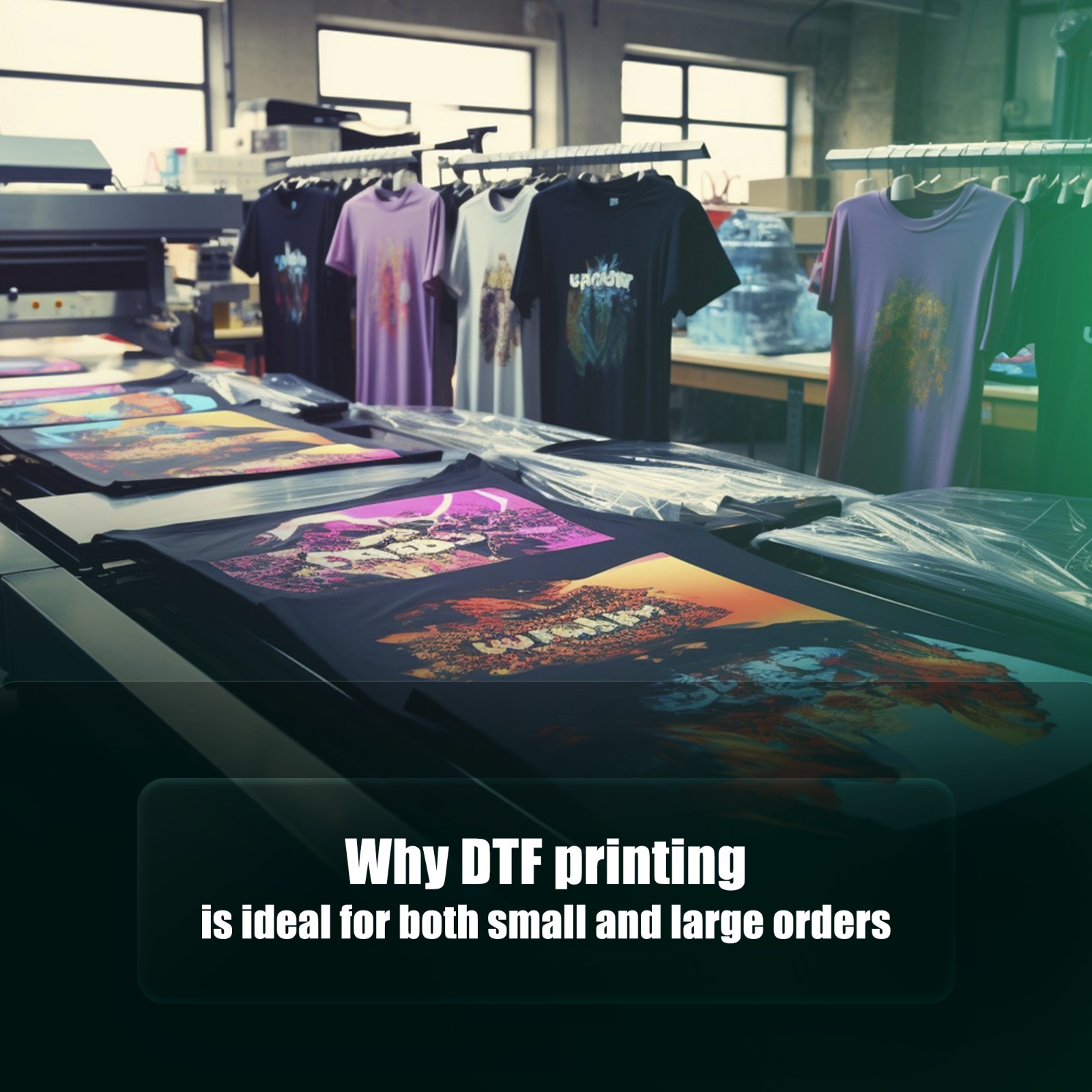
Businesses in the apparel market are expected to produce high-quality products, minimize lead times, and be cost-effective. From startups with their first collections, to established retailers with seasonal launches, to corporate clients needing a large amount of uniforms, there are different complexities to every order size. Traditional printing methods often force businesses to choose between affordability and flexibility, making it difficult to scale smoothly.
This is where DTF printing services in UAE are proving to be a game-changer. Direct-to-film printing is beneficial because it streamlines the production process, ensuring that businesses of any size or demand receive consistent, lasting, and vibrant results.
From this blog, let’s understand “Why DTF printing is ideal for both small and large orders”.
DTF printing works by transferring a digitally printed design from a film onto fabric through heat and pressure. While this may sound simple, the results are anything but ordinary. The technique allows for precise detailing, vibrant colors, and long-lasting prints that can withstand frequent washing and heavy use.
For B2B clients, this matters because apparel is not just a product; it is a brand representation, a marketing tool, or even part of an employee’s professional identity. Unlike screen printing, which requires expensive setup for every design, or DTG, which is limited to certain fabric types, DTF is versatile and adaptable, making it the ideal option for businesses that need efficiency without compromising quality.
Small orders are often the toughest to manage for businesses. Prototyping a new product line and preparing a limited-edition collection or merchandise for a corporate event can be prohibitively expensive using traditional methods. DTF breaks down the barriers to building options by eliminating setup fees and making small batches possible and affordable. This allows companies to experiment with fresh designs, test the market with lower risk, and fulfill customized requests without inflating costs.
The quick turnaround time also adds value for businesses that need to react quickly to seasonal trends or promotional campaigns. Instead of committing to large inventories, brands can order only what they need, when they need it, and scale up once demand is proven. This flexibility enables a more agile business model that aligns with today’s fast-paced market conditions.
On the other hand, large-scale businesses that require consistent, repeatable, and durable production benefit from DTF print’s ability to maintain the same quality over hundreds or thousands of garments. Each one coming off the press is visually identical to its companion in terms of color accuracy, design clarity, and finish, a key consideration in the production of uniforms, retail collections, or for franchises where every team and every location must present a consistent brand identity.
Durability is certainly another major profitability metric for companies buying from corporate suppliers or wholesalers. Not just are DTF prints fade-resistant, peel-resistant, and crack-resistant – simply put, they will last, even after repeated washing/cleaning. So for clients producing workwear or retail apparel, durability is a clear cost benefit – lowering replacement costs in the medium term by decreasing the chances that it would need to happen. This cost-benefit is a great attraction when looking at DTF print for orders of any magnitude, even hundreds of garments.
DTF printing provides exceptional flexibility across fabric types and products. High-quality prints can be achieved with cotton, polyester, blends, and even textured fabrics, allowing businesses to expand their product lines without changing technologies. It also allows users to print both impact items and consumer goods (t-shirts, hoodies, tote bags, caps, jackets, etc.).
For many clothing manufactures in UAE, this ability is particularly valuable. Rather than purchasing and investing in several technologies of printing to meet individual client requirements, manufacturers can simply use DTF to meet the demands of varied markets, instead of going through multiple separate processes. This ability not only simplifies their operations but also enables them to serve their clients quickly and effectively.
Cost control is the central component of any B2B decision, and DTF does that consistently. Conventional printing typically becomes cost-effective at a certain scale, meaning smaller runs can feel disproportionate to produce. With DTF, the scales are different. Small runs are still cost-effective due to the absence of setup costs, whereas large runs simply involve the productivity and efficiencies that the printer gains through DTF’s processes and workflows.
For businesses, this means greater control over budgets and inventories. Instead of overproducing and risking unsold stock, companies can print on demand and replenish supply as needed. This approach minimizes waste, improves cash flow, and reduces the burden of carrying excess inventory, which is a major advantage in industries with fluctuating demand.
At PP Apparel Hub, we understand that an order for our clients is like making a strategic decision. That is why we combine advanced DTF technology with accuracy and customer satisfaction. We help small businesses experiment and develop without a large up-front commitment. For established retailers and corporate clients, we provide the infrastructure and expertise to deliver bulk orders with consistent quality and strict adherence to timelines.
Our focus is not just on printing apparel but on enabling businesses to strengthen their brand identity and maintain a competitive edge. Clients gain a trustworthy partner that knows the logistics of the B2B market and will provide solutions that accommodate their targets.
The apparel industry is evolving into a more agile place, and companies must adjust to respond to their customer prerequisites, as well as to market developments. DTF printing can provide one solution for both low and high runs, overcoming challenges presented by previous options. High-quality, low-cost, scalable – all types of commerce in one coherent process.
For businesses, this means fewer compromises and more opportunities to grow strategically. DTF provides the flexibility and reliability needed to readily succeed in a competitive marketplace, whether limited runs to explore new concepts or regular production for established businesses. At PP Apparel Hub, we are thrilled to support companies across the UAE with this future-ready solution, helping individuals, retailers, and clothing manufacturers in Dubai bring their designs to life with confidence.